How The Right Attic Insulation Cuts Your Cooling Costs In Arizona
Walk into most Arizona homes and the owner can’t tell you the first thing about what’s in their attic. It’s out of sight, so it stays out of mind, right up until August, when the bill lands and the back bedroom still won’t cool off. That insulation nobody thinks about is doing one of the hardest jobs in the house: holding back the 150 degree air sitting over your ceiling so the air conditioner doesn’t have to. When it gets thin or worn out, the AC loses that fight a little more each year, and you quietly cover the difference. Here’s what attic insulation really does in our climate, how much of it a house needs, and how to spot when yours has given up.
The short version, if you’re skimming:
- Your attic is where an Arizona home wins or loses the cooling fight. Up there, summer temperatures run past 150 degrees.
- Energy Star’s baseline for our zone is roughly R30 of attic insulation, and plenty of older homes here are nowhere close.
- Seal the air leaks and add insulation together, and Energy Star figures the average home trims heating and cooling costs by about 15 percent.
- Insulation by itself isn’t the whole answer. If the attic isn’t also sealed and vented, more insulation can backfire.
- Climbing bills, rooms that never cool, an AC that never shuts off: the attic is usually the first place to look.
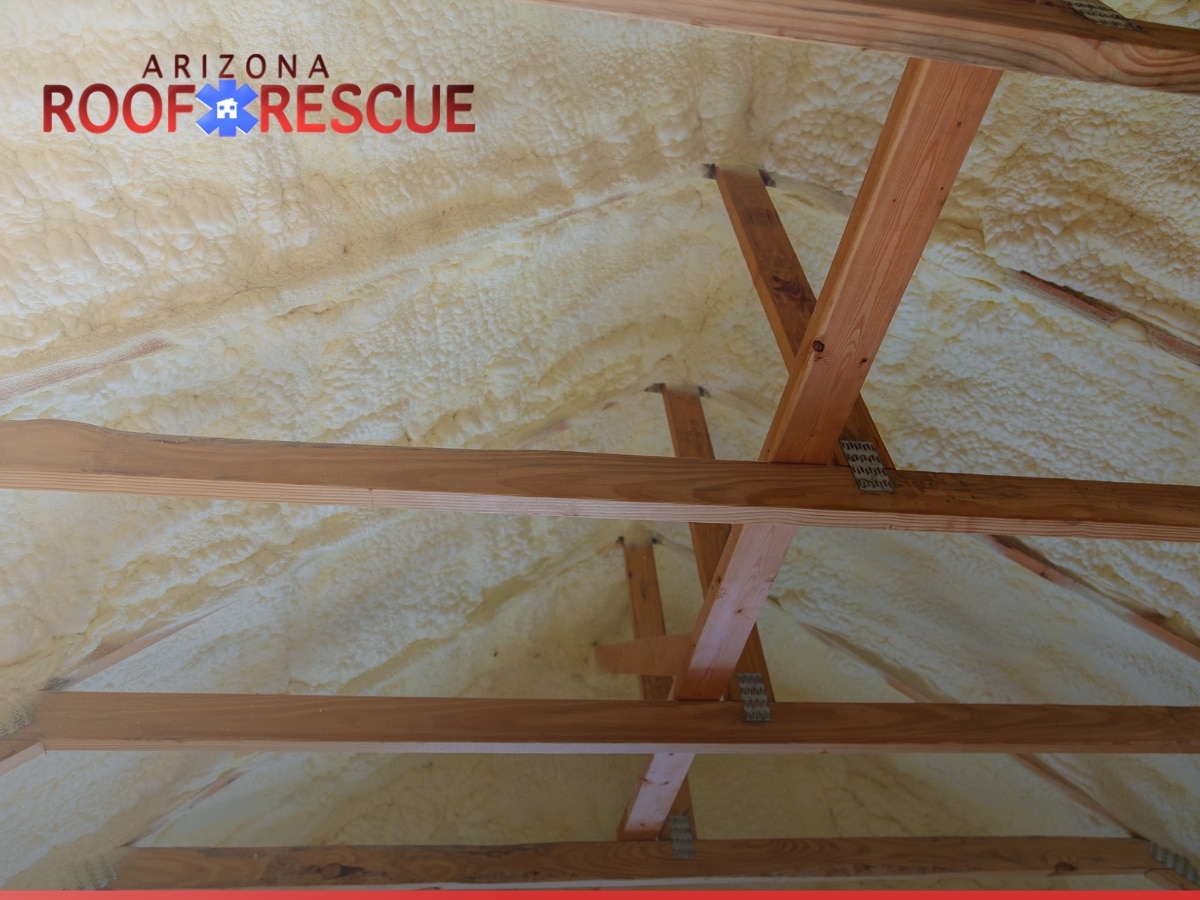
Why The Attic Is The Battleground
Insulation in a cold state is about keeping heat in. Ours does the opposite job, and the opposite job is harder. By mid afternoon in July the air trapped in an attic can push past 150 degrees while the house below is trying to hold 78. That heat doesn’t respect the ceiling. It works its way down into the rooms, and the air conditioner has to haul it back out, hour after hour, for months on end. Insulation is the speed bump in between. Thin it out, and you’re essentially air conditioning a slice of your attic.
It’s the reason we look up before we look at the windows or the walls when a house is bleeding money in summer. Two near identical homes on the same street, same size AC, can run a good chunk apart on a July bill, and the attic is usually the whole story. One house is paying for a cool living room. The other is paying to fight its own roof.
How Much You Actually Need
Insulation gets rated by R-value, a measure of how well it resists heat passing through. Bigger number, more resistance. Energy Star’s recommendation for our zone lands around R30, and a lot of roofers and insulation crews here push for closer to R38, because our summers lean on an AC harder than almost anywhere in the country. Your right number depends on the house. But the problem we actually run into is rarely R30 versus R38. It’s homes sitting at half of that with nobody the wiser.
You can eyeball it yourself. If the insulation sits level with the wooden joists or below them, it’s thin, probably somewhere in the R11 to R19 neighborhood, and it wants more on top. If it looks matted down, grayed out, or shoved into hills and valleys, it’s lost R-value even where it still looks deep. And if no one can remember it ever being touched, it’s overdue.
What It Buys You
The return comes in three ways, and they stack on each other. Start with the bills. Air seal the house and add attic insulation together, and Energy Star puts the typical savings near 15 percent of heating and cooling costs, call it 11 percent of the whole energy bill. For half the year here, cooling basically is the bill, so that slice bites, and it keeps biting every summer after. If your utility bills keep creeping up, the attic is one of the cheapest places to go hunting.
Then there’s comfort, which is harder to put a number on but easier to feel. The ceiling stops radiating heat down in patches, so you quit riding the thermostat and that one stubborn room finally falls in line with the rest of the house. And last is the equipment itself. An air conditioner that isn’t wrestling a 150 degree attic runs shorter cycles and lasts longer, which is no small thing given what a new unit costs to drop in.
Insulation Is Only Half The Job
Pile in insulation without sealing and venting the attic and you can make the problem worse. If hot outside air is sneaking in through gaps, and the attic has no real way to push the heat back out, all that insulation does is trap a hot, sometimes damp pocket tight against your ceiling.
So we treat the roof and the attic as one system, not three separate errands. Air sealing shuts the gaps where your cool air leaks out and outside heat leaks in. Good roof ventilation gives the attic a way to breathe so heat and moisture have somewhere to go. Insulation then does its job on a space that’s stable, sealed, and vented. Line up all three and the payoff dwarfs what any one of them does alone. It’s the same reason certain roofing choices swing your indoor temperature as much as the insulation tucked underneath them.
Signs Your Insulation Has Quit
You don’t have to crawl up there to have a hunch. What we hear most:
- The summer electric bill inches up a little more every year and nobody can say why.
- Certain rooms, usually upstairs or on the west side, that just won’t cool down.
- An AC that seems to run flat out all afternoon and never quite catches up.
- A house pushing twenty years old whose insulation has never been so much as looked at.
- Insulation you can see that is thin, patchy, flattened, or sitting down at the joists.
One of these on its own is worth a look. Stack two or three and the attic is almost certainly costing you.
Why Arizona Pays Back Faster: our summers run so long that attic work pays back faster here than in most of the country. The same R-value that saves a homeowner in a mild climate a few dollars saves a real chunk when the AC is running April through October. If your insulation is the original stuff from when the house went up, it’s very likely handing money to the power company every one of those months.
Frequently Asked Questions
What R-Value Do I Need For An Attic In Phoenix?
Energy Star’s starting point for our zone is about R30, and plenty of local crews aim nearer R38 given how our summers push an AC. The exact figure depends on the house, but for most Arizona homes the real issue is sitting well under R30 in the first place.
How Much Can Better Attic Insulation Really Save?
Energy Star pegs the average around 15 percent of heating and cooling costs when you air seal and add insulation together. Here, where cooling runs the bill for a big part of the year, that number tends to land on the higher side.
Can I Just Add New Insulation Over The Old?
Usually, yes. If the existing insulation is dry and still in decent shape, fresh insulation can lay right over it to build the R-value back up. If the old stuff is wet, moldy, packed flat, or covering up air leaks, that has to be dealt with first. It’s exactly what an inspection is for.
What Does My Roof Have To Do With Attic Insulation?
Plenty. The roof, its ventilation, and the attic insulation all pull on the same job of managing heat and moisture. A leak, weak ventilation, or the wrong roofing setup can quietly undo good insulation, which is why we look at the whole system instead of one slice of it.
Get Your Attic Looked At Before Next Summer
We’re on and in Arizona roofs every day, so we tend to see what the attic underneath is up to: whether the insulation is earning its keep, whether the space is sealed and vented the way it should be, and whether the roof is helping your energy bills or quietly working against them. If your home runs hot or the summer bills keep climbing, let’s take a look. Reach out for a free inspection or call 602-242-2706, and we’ll give you a straight answer on what your attic and roof are actually costing you, and what is worth doing first.